 By
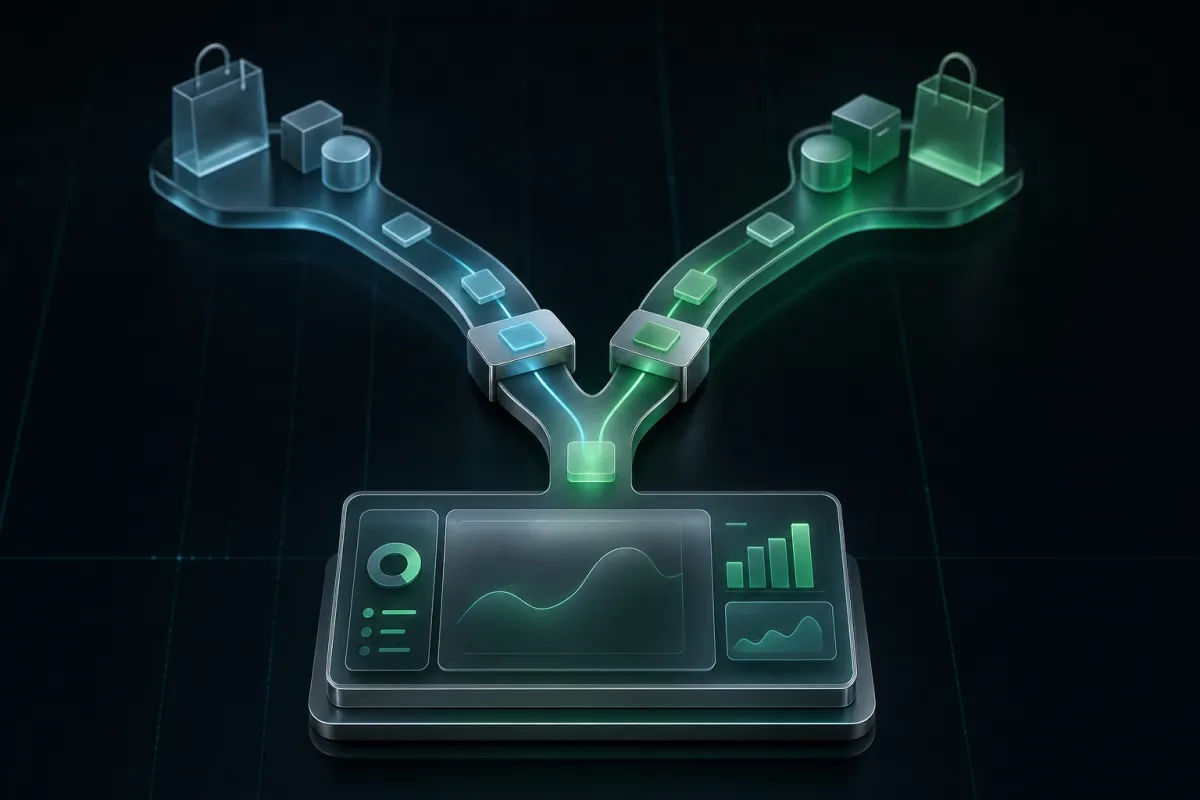
Choose Shopify checkout when your DTC business is built around a full online store, native Shopify operations, and a clean buying path from product page to checkout. Choose CheckoutChamp when your growth model depends on dedicated landing-page funnels, frequent offer testing, upsells, subscriptions or continuity programs, and CRM-style campaign workflows.
For many brands, the right answer is not CheckoutChamp vs Shopify as a winner-take-all decision. You can run Shopify as your primary storefront and use CheckoutChamp for specific acquisition funnels, as long as inventory, orders, attribution, customer data, and reporting are planned carefully. And if you want something simpler than both, Submerce, the checkout and funnel platform we are building, is in early access.
CheckoutChamp vs Shopify: what is the practical difference?
The practical difference is that Shopify is a commerce platform with a native checkout, while CheckoutChamp is often used as a funnel and campaign checkout system for direct-response selling. Shopify is strongest when the store, catalog, checkout, payments, fulfillment, apps, and reporting should live in one commerce stack. CheckoutChamp is strongest when the offer path itself is the product: landing page, order form, upsell sequence, subscription or continuity flow, and follow-up campaign logic.
That difference matters because a DTC funnel is not the same as a normal store journey. A store journey usually looks like this: customer browses, compares products, adds to cart, checks out, and may come back later. A funnel journey is more controlled: customer lands on one offer, sees specific copy and pricing, completes an order form, then may see one or more upsell or cross-sell offers before confirmation.
Neither model is automatically better. If your business relies on SEO, merchandising, repeat browsing, content, gift purchases, and a growing product catalog, Shopify’s native approach is usually cleaner. If your business relies on paid traffic to specific offers and constant testing of hooks, bundles, trial structures, upsells, and continuity, CheckoutChamp can be a strong fit.
As of 2026, both ecosystems continue to change, especially around checkout customization, payments, privacy, tax, and subscription rules. This is not legal or tax advice; have a qualified advisor review your compliance setup for the US, Canada, subscriptions, recurring billing, and cross-border sales.
When is Shopify checkout the better choice for a DTC brand?
Shopify checkout is the better choice when you want one reliable store system for catalog management, checkout, orders, fulfillment, analytics, and app integrations. It is especially strong for brands that sell multiple products, rely on repeat customers, need merchandising flexibility, and want fewer moving parts between store operations and checkout.
For a typical DTC store, Shopify gives your team a consistent operating model. Products, variants, inventory, discounts, orders, refunds, customer records, shipping settings, and many integrations are managed in one place. That can make daily operations simpler for marketing, support, fulfillment, finance, and development teams.
Shopify checkout also benefits from customer familiarity. Many shoppers recognize the experience, especially when accelerated payment options are available. That does not guarantee better conversion for every funnel, but it reduces the amount of custom behavior your team has to maintain.
Shopify is often the better fit if your priorities look like this:
- You want a traditional e-commerce store with product collections, search, filters, product pages, cart, and checkout.
- Your team depends on Shopify admin workflows for merchandising, order management, fulfillment, returns, and customer service.
- You want the simplest path for SEO content, product discovery, and organic traffic.
- You use Shopify apps for email, reviews, subscriptions, loyalty, returns, shipping, or analytics.
- You need a checkout setup that stays close to Shopify’s supported upgrade path.
Customization is still possible, but the approach depends on your plan, apps, and Shopify’s current checkout architecture. If checkout changes are a major part of your roadmap, read our guide to Shopify Checkout Extensibility before you commit to a build plan.
If you are building or rebuilding your store around Shopify, Bytecode’s Shopify development work focuses on storefront architecture, performance, theme development, integrations, checkout readiness, and maintainable e-commerce operations.
When is CheckoutChamp the better choice for a DTC funnel?
CheckoutChamp is the better choice when your funnel needs more control over the direct-response buying path than a standard store checkout usually provides. It is commonly used by DTC brands that sell through paid traffic, dedicated landing pages, one-product offers, bundles, trial offers, upsell flows, subscriptions, and continuity-style campaigns.
The main reason teams choose CheckoutChamp is control over the funnel sequence. Instead of sending every visitor through a full store journey, you can build a focused path around a specific campaign. That path can include a landing page, order form, offer logic, post-purchase offers, and customer follow-up steps that match how the campaign is being acquired and measured.
CheckoutChamp can also make sense when the CRM and campaign layer is central to your business model. Some brands want campaign-level segmentation, offer routing, recurring billing workflows, call center support, affiliate or media-buying workflows, and reporting that maps more closely to acquisition funnels than to a classic catalog store.
CheckoutChamp is often a good fit if your priorities look like this:
- You buy traffic to dedicated funnel pages instead of sending most visitors to a standard product page.
- You test landing pages, copy, bundles, pricing, and upsell sequences frequently.
- Your revenue model includes subscriptions, continuity, replenishment, or trial-to-recurring offers.
- You need funnel-level reporting that separates campaigns, offers, sources, and upsell performance.
- You have operations that depend on CRM-style customer management rather than only store admin workflows.
The tradeoff is that you are usually managing a more specialized stack. You need to think about how orders, inventory, customer records, fulfillment, taxes, analytics, support, and financial reconciliation move between systems. That is not a reason to avoid CheckoutChamp. It is a reason to design the integration instead of improvising it after the funnel is live.
Bytecode builds and maintains CheckoutChamp implementations for brands that need funnel development, integrations, analytics, and operational fixes. You can see that service here: CheckoutChamp development.
Can you run Shopify and CheckoutChamp together?
Yes, you can run Shopify and CheckoutChamp together when each platform has a clear job and the data flow is intentionally designed. A common setup is Shopify for the main store and brand site, with CheckoutChamp powering dedicated paid acquisition funnels.
This hybrid model can work well because it avoids forcing one platform to do everything. Shopify can remain the system your team uses for store browsing, content, product discovery, merchandising, and many operational workflows. CheckoutChamp can handle specific direct-response campaigns where the funnel experience, upsells, and subscription logic are more important than the general store experience.
The risk is data fragmentation. If orders are created in one system, fulfilled from another, analyzed in a third, and supported from a fourth, your team can quickly lose trust in the numbers. Before you run both together, decide which system owns each core record.
At minimum, map these flows:
- Products and SKUs: Decide where product data is created and how SKUs stay consistent across systems.
- Inventory: Decide which system is the inventory source of truth and how stock changes are synced.
- Orders: Decide where orders are stored, fulfilled, refunded, and reconciled.
- Customers: Decide how customer records, consent, tags, segments, and support history move between tools.
- Subscriptions: Decide which platform owns recurring billing, cancellation flows, retry logic, and customer updates.
- Analytics: Decide how attribution, conversion events, upsells, refunds, chargebacks, and lifetime value are reported.
The best hybrid setups are boring behind the scenes. Each system has a defined role. Events are tracked consistently. Support can find the customer. Finance can reconcile orders. Marketing can trust campaign reporting. Developers are not asked to reverse-engineer business rules from scattered spreadsheets.
How should you choose between CheckoutChamp and Shopify?
You should choose based on your sales motion, not based on which checkout sounds more powerful. Start with how customers buy, how your team operates, and where your growth bottleneck actually sits.
Use this decision checklist:
- If most customers browse before buying, start with Shopify checkout. A full store experience usually fits better when customers compare products, read content, use search, browse collections, and return later.
- If most customers arrive from paid ads to one offer, consider CheckoutChamp. Funnel-specific checkout can be useful when the buying path is tightly controlled and measured campaign by campaign.
- If your catalog is expanding, keep Shopify central. Product discovery, merchandising, inventory operations, and SEO usually benefit from a native store structure.
- If upsells and continuity are core to the offer, evaluate CheckoutChamp seriously. A dedicated funnel platform may give your team more room to test offer structures and post-purchase flows.
- If your team is lean, reduce platform count. More systems mean more integration work, more QA, and more places for reporting to disagree.
- If paid acquisition is mature, optimize the funnel stack. Once you are spending enough for testing discipline to matter, specialized funnel tooling may be worth the operational overhead.
- If SEO is a major channel, protect the store architecture. Product pages, collection pages, content hubs, internal linking, and technical SEO need a stable foundation.
A simple way to frame it: Shopify checkout is usually the default for a store-led DTC brand. CheckoutChamp is usually a serious option for a funnel-led DTC brand. A hybrid setup is often right when you are both: a real brand site with a separate direct-response acquisition engine.
What are the tradeoffs in conversion, operations, and reporting?
The main tradeoff is that Shopify usually simplifies operations, while CheckoutChamp can provide more funnel control. Conversion rate alone is too narrow a lens because the checkout affects fulfillment, support, accounting, analytics, compliance, and development velocity.
For conversion, CheckoutChamp may give your marketing team more control over campaign-specific flows, especially when upsells and continuity are part of the offer. Shopify may perform better when customers expect a familiar store checkout, use accelerated payments, or need to browse before committing. The only honest answer is to test within your own traffic mix and offer structure.
For operations, Shopify often has an advantage because more of the commerce workflow lives in one admin. Your team can manage products, orders, customers, fulfillment, discounts, and apps without as much custom glue. CheckoutChamp can still support serious operations, but the implementation needs clearer ownership around integrations and data flows.
For reporting, the best platform is the one your team can trust. A beautiful funnel is a problem if you cannot reconcile ad spend, orders, upsells, refunds, subscriptions, and fulfillment costs. Before you choose, define the metrics your team reviews every week and confirm how each platform will capture them.
For development, Shopify work often centers on theme quality, app integration, checkout constraints, performance, and maintainability. CheckoutChamp work often centers on funnel pages, offer logic, CRM workflows, tracking, payment flows, and integrations. Both require QA discipline, especially on mobile checkout and analytics events.
If mobile checkout is one of your biggest issues, this practical guide to mobile checkout abandonment is a useful companion to the platform decision.
Where does Submerce fit?
Submerce is the checkout and sales-funnel platform we are building at Bytecode: a simpler option for DTC brands that want a focused checkout and funnel without adopting a larger campaign stack. It is in early access at submerce.app. Full disclosure, it is our own product, and we will keep building and supporting CheckoutChamp and Shopify setups for the brands that run on them.
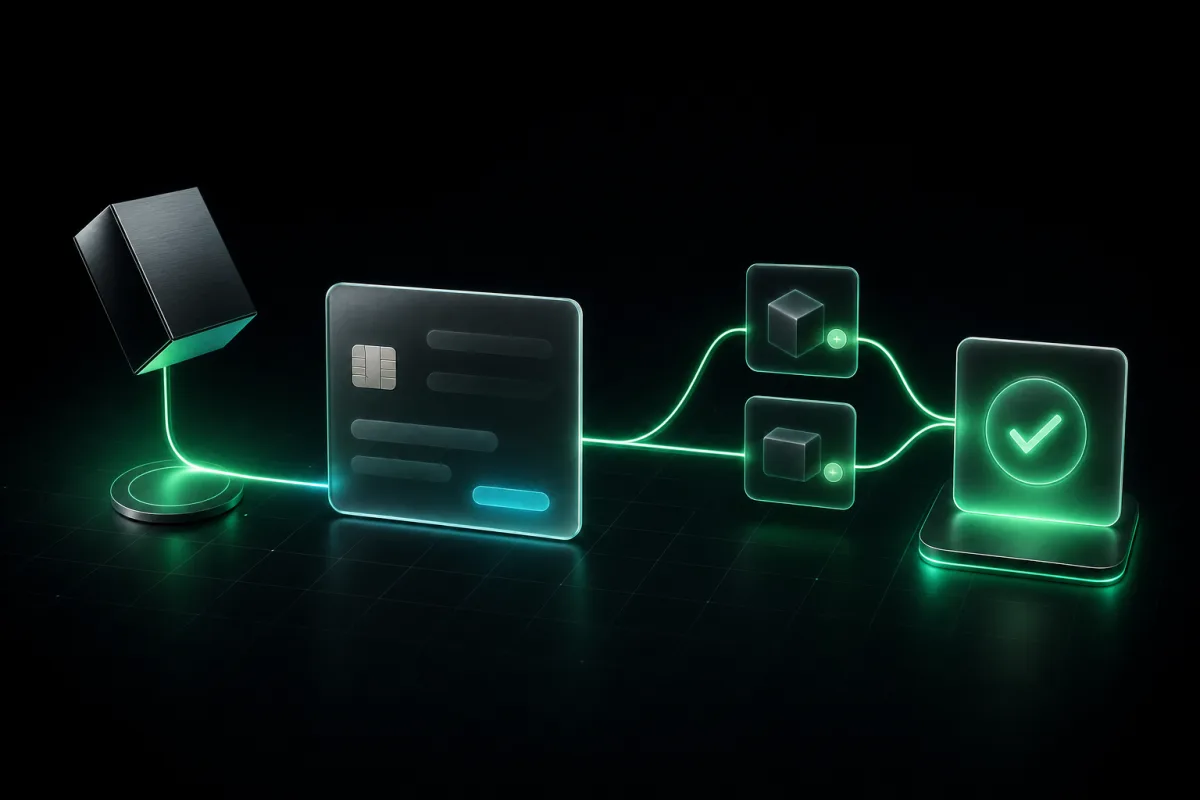
Because Submerce is new, evaluate it for fit and roadmap rather than as a drop-in replacement for every Shopify or CheckoutChamp use case. The useful question is whether it supports the flows your business actually needs: products, offers, upsells, subscriptions, payments, taxes, fulfillment, customer support, analytics, and integrations. If the simpler model covers your requirements, that can be valuable. If your team needs mature campaign operations and specialized CRM workflows, a more established funnel platform may still be the better fit. Join the Submerce early-access list if you want to see it early.
Implementation checklist before you switch checkout platforms
You should not switch checkout platforms until your team has documented the current funnel, the target funnel, and the systems that depend on checkout data. Checkout migrations create problems when the team focuses only on page design and ignores operations.
Before launch, confirm the following:
- Offer structure: Products, variants, bundles, discounts, trials, upsells, subscriptions, and shipping rules are documented.
- Tracking plan: Page views, add-to-cart events, checkout starts, purchases, upsells, refunds, and subscription events are defined consistently.
- Payment setup: Gateways, payment methods, fraud settings, descriptor expectations, and refund flows are tested.
- Tax and duties: US and Canadian tax, shipping, duties, and cross-border assumptions are reviewed by the right advisors.
- Fulfillment: Orders route correctly to warehouses, 3PLs, dropship partners, or internal teams.
- Customer support: Support can find orders, subscriptions, refunds, cancellations, and shipping status quickly.
- Email and SMS: Transactional messages and marketing flows are triggered from the correct events.
- QA: Desktop, mobile, payment methods, error states, abandoned checkout, upsells, refunds, and analytics are tested before paid traffic is scaled.
If your current store is already slow or technically fragile, fix the foundation before adding funnel complexity. A fast storefront and clean tracking setup make both Shopify and CheckoutChamp perform better.
Frequently asked questions
Is CheckoutChamp better than Shopify checkout?
CheckoutChamp is better for some funnel-led DTC businesses, especially when campaign control, upsells, subscriptions, continuity, and CRM workflows are central to the sales model. Shopify checkout is usually better for store-led brands that want native commerce operations and a simpler system of record.
Can Shopify be used for landing page funnels?
Yes, Shopify can be used for landing page funnels, especially when the offer is simple and the brand wants to keep checkout native. The limits usually appear when you need highly specific order forms, complex upsell paths, or campaign workflows that do not fit neatly into the store model.
Should a DTC brand use both Shopify and CheckoutChamp?
A DTC brand should use both only when the benefit of specialized funnels is worth the extra integration work. The hybrid setup can be strong, but you need clear ownership for products, inventory, orders, customers, subscriptions, support, and reporting.
Does checkout choice affect SEO?
Checkout choice affects SEO indirectly. The bigger SEO factors are usually your storefront architecture, product and collection pages, content, speed, internal links, and technical indexability, but checkout changes can affect conversion from organic traffic.
What should we audit before changing checkout?
Audit your current funnel metrics, payment flow, mobile experience, analytics events, fulfillment process, subscription logic, and customer support workflow. If you want an outside technical review first, Bytecode offers a free store and funnel speed plus SEO audit.
Talk to Bytecode about your DTC checkout setup
If you are choosing between Shopify checkout, CheckoutChamp, or a hybrid funnel setup, it helps to map the sales motion before touching the tech stack. Bytecode, a New York-based web, SaaS and e-commerce development studio working with brands across the US and Canada, can help you plan the architecture, build the funnel, and clean up the integrations.
If you want a practical second opinion, talk to Bytecode.