 By
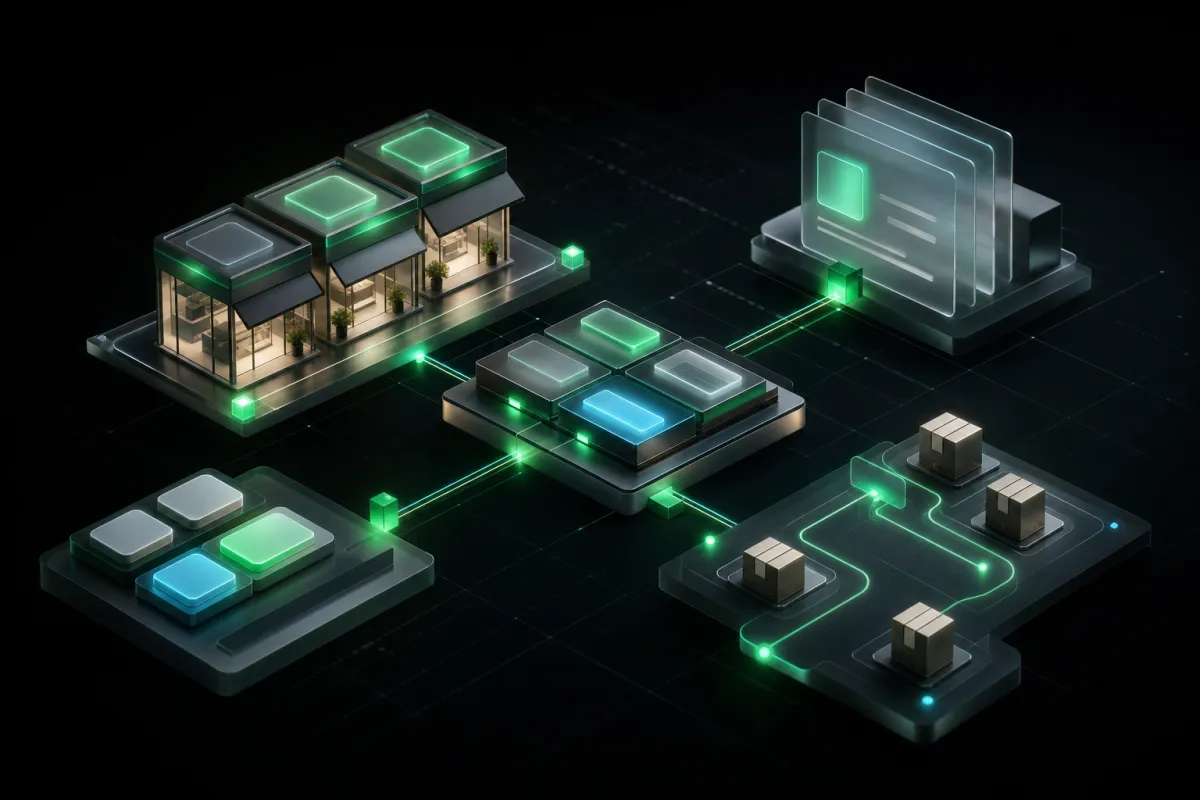
Building an online store in India is not just a US e-commerce build with a different currency. You must plan for UPI, cash on delivery, GST-ready invoices, 6-digit PIN codes, Indian courier workflows, AWB tracking and returns to origin from the start.
The core store can still be built well on Shopify, WooCommerce, an India-first platform or a custom stack. The difference is in the checkout, tax, address, shipping and operations details.
Key takeaways
- An online store in India should support UPI, cards, netbanking, wallets and, where suitable, cash on delivery.
- GST planning affects onboarding, invoices, credit notes and reports, so involve a CA before launch.
- Indian addresses depend heavily on state names and 6-digit PIN codes for shipping serviceability.
- Indian courier integrations should expose AWB tracking, delivery status and RTO handling on each order.
- Shopify, WooCommerce, India-first builders and custom builds can all work when matched to the business model.
What is different when building an online store in India?
The main difference is that Indian commerce operations are more payment-diverse and logistics-sensitive than a typical US store build. A US-first checkout usually focuses on cards, express wallets, state sales tax and carrier labels. An India-focused build must handle more payment choices, more COD risk, GST documents and PIN code based delivery checks.
UPI means Unified Payments Interface, a common bank-to-bank payment method used widely in India. COD means cash on delivery, where the customer pays when the parcel is delivered. GST means Goods and Services Tax, the indirect tax system used for many goods and services in India.
Developers should treat these as product requirements, not add-ons. If checkout, invoicing and shipping are designed later, teams often end up with manual work in spreadsheets and support chats.
How do Indian shoppers pay online?
Indian stores should usually plan for UPI, cards, netbanking, wallets and COD, because shoppers do not all prefer the same method. UPI is a familiar way to pay for many Indian customers. Cards, netbanking and wallets still matter, especially for higher-value or repeat orders.
Netbanking means paying through the customer’s bank login or bank approval flow. Wallets are stored-value or app-based payment methods supported by payment gateways. Your payment gateway decides the exact methods available, settlement rules and documentation requirements.
For a US team, the biggest change is COD. It is not just another payment option. It changes fraud checks, dispatch decisions, delivery success, returns and cash reconciliation. Many brands allow COD because it can reduce purchase hesitation, but it also creates operational risk.
A practical India checkout should make payment status clear. Do not mark an order paid just because the browser returns to a success page. Payment status should come from the gateway response or a signed webhook. This protects the team when a customer closes a tab, refreshes, or a network call fails.
Should your India store offer cash on delivery?
You should offer COD only if your margin, courier rules and support process can handle failed deliveries and returns. COD can help customers who are cautious about prepaid orders, but it creates real costs when parcels are refused, undelivered or delayed.
The main COD risk is RTO. RTO means return to origin, where a shipped parcel comes back to the seller after failed delivery, refusal or non-payment. On COD orders, RTO can mean you paid for outward movement and return movement without receiving payment.
Good COD handling starts before checkout. You may want PIN code serviceability checks, phone number validation, order confirmation calls for risky carts and clear customer communication. Developers should make sure COD orders can be filtered, reviewed and tracked separately.
For operations teams, COD should appear as a distinct payment state. It should not be mixed with prepaid pending orders. Finance teams also need to know when cash was collected by the courier and when it was remitted.
What GST basics matter for an online store in India?
As of 2026, GST basics matter because Indian buyers and sellers often need tax documents that match Indian compliance workflows. A GSTIN is a Goods and Services Tax Identification Number assigned to a GST-registered business. PAN means Permanent Account Number, a tax identity used in India.
For a store build, this affects onboarding and documents. The system should know whether the seller has a GSTIN or is using a PAN because they are not yet GST-registered. It should also generate GST-ready invoices, credit notes and reports in a structured way.
Do not hard-code assumptions about rates, thresholds or registration rules. They change, and they depend on the seller, product category and facts. The safer product decision is to store the correct seller details, product tax information and document history, then let the business confirm current treatment with a CA.
This is not legal or tax advice; check current GST registration, invoicing and rate requirements with a qualified CA.
How should Indian addresses and PIN codes be handled?
Indian address handling should be built around states, cities, local address lines and a 6-digit PIN code. A PIN code is India’s postal index number used to identify delivery areas. It is one of the most important fields for shipping serviceability.
Do not copy a US address form without changes. ZIP code labels, county fields and state assumptions can confuse buyers. Use clear fields for full name, mobile number, address line, locality or area, city, state and PIN code.
PIN code validation is useful, but it should not be too aggressive. Some areas have unusual naming patterns, new serviceability changes or local spelling differences. A good store checks for 6 digits, supports courier serviceability checks and lets support teams correct obvious mistakes.
State selection also matters for GST documents and reporting. Use consistent state names across checkout, invoices and shipping labels. If your team later integrates analytics or accounting tools, clean state data saves time.
How do Indian couriers, AWB tracking and RTO change the build?
Indian courier workflows require order-level visibility into shipment creation, AWB tracking, delivery status and RTO status. AWB means airway bill, the courier tracking number assigned to a shipment. It is the key reference used by customers, support teams and courier partners.
A basic store that only stores “fulfilled” is usually not enough. Indian operations teams often need to see packed, shipped, in transit, out for delivery, delivered, delivery failed and RTO states. These states decide what support should do next.
Developers should keep shipping events attached to the order timeline. That makes it easier to answer customer questions without jumping across courier portals. It also helps the team identify COD orders that are at risk before they become RTO.
Returns are not always customer-initiated returns. RTO is different from a customer return after delivery. Your data model should separate them. A delivered order returned by the customer is not the same as a refused COD parcel that never completed payment.
Three ways to build an online store in India
The right way to build an online store in India depends on how much flexibility, speed and operational control you need. Shopify and WooCommerce are strong options for many brands, and Bytecode builds on both. An India-first builder or custom build can also be the right call when the operating model needs it.
| Approach | Good for | India-specific work to plan | Tradeoff |
|---|---|---|---|
| Global platform such as Shopify or WooCommerce | Brands that want a proven commerce base and a large ecosystem | Payment gateways, GST invoices, COD rules, courier apps and address handling | You may need India-specific apps, configuration and careful QA |
| India-first all-in-one store builder | Small teams that want store, payments, shipping, invoices and customers in one dashboard | Check payment methods, GST flows, courier support and plan limits | You trade some platform flexibility for simpler operations |
| Custom build | Marketplaces, complex workflows, SaaS-commerce products or deep internal systems | Everything must be designed, implemented, secured and maintained | Maximum control, but more engineering responsibility |
If you already use Shopify, plan the India store as a review of payment gateways, apps, theme and checkout rather than assuming a rebuild. Bytecode can help with Shopify development when the platform fits the brand and operating model.
If you prefer WordPress content control or have a WooCommerce stack already, India can work there too. The key is careful plugin selection, performance work and order operations. Bytecode also builds WooCommerce stores for teams that want that route.
If your India store is part of a bigger product, marketplace or internal system, a custom build may be cleaner. In that case, payments, GST, shipping and support workflows should be designed like core product features. Bytecode’s custom application development work is closer to this path.
Where does Submerce fit for an online store in India?
Submerce fits the India-first all-in-one category, and it is launching soon. Submerce is an online store builder and realtime commerce dashboard for Indian businesses, built by Bytecode.
A business gets its online store at yourname.submerce.in, or on its own domain from the Starter plan. It brings the store, orders, payments, shipping, GST-ready invoices and customers into one dashboard, with no developer, no agency and no extra apps.
Payments include cash on delivery on every plan. UPI, cards, netbanking and wallets are supported through payment gateways like Razorpay from the Starter plan. Shipping is built around Indian couriers, with AWB, delivery and RTO tracking on each order.
GST onboarding starts with a GSTIN, or a PAN for sellers not yet GST-registered. Submerce also supports GST-ready invoices, credit notes and GST reports. New orders, payments and alerts appear the moment they happen, with no refreshing. Live view, which shows visitors on a map of India, is on the Growth and Pro plans.
The plans are Free ₹0, Starter ₹999, Growth ₹2,499 and Pro ₹6,999, with no setup fee. Submerce starts with online stores, and dashboards for hotels and restaurants are planned next.
What should founders and developers decide before launch?
You should decide payment methods, GST document needs, address rules, courier flows and return handling before design sign-off. These choices affect checkout UX, admin screens, database design and support operations.
Start with payments. Decide whether COD is available to every customer, only some PIN codes, or only after review. Decide what happens when prepaid payment is pending, failed, captured or refunded.
Then plan GST. Ask what seller details are required, who will maintain product tax information and how invoices and credit notes are generated. Make sure the finance team can export the reports it needs.
Next, plan shipping. Decide how orders move from placed to packed to shipped. Decide where AWB numbers are stored, how tracking updates arrive and how RTO is shown to support agents.
Finally, test the unhappy paths. Failed UPI payment, COD refusal, wrong PIN code, courier delay, duplicate webhook and invoice correction are more useful test cases than another happy-path checkout.
What should US teams know before selling to Indian customers?
US teams should assume that India is a different operating market, not only a new shipping destination. Payment trust, delivery expectations, tax documents and support patterns are different enough to affect the product backlog.
Do not hide UPI behind a generic “other payment method” label if it is available. Do not treat COD like prepaid orders. Do not assume the address form from a US build is good enough. Do not ship without a clear RTO process.
At the same time, avoid overcomplicating the first release. Start with the payment methods and courier flows that match your first product category and customer segment. Add more rules when your own order data proves you need them.
If you are building a new DTC brand, a short planning session can prevent expensive rework. Bytecode offers a free launch consultation for founders starting a DTC brand.
Frequently asked questions
Can I build an online store in India on Shopify?
Yes, Shopify can be a good option for many brands selling in India. You still need to configure India-specific payment gateways, GST invoice needs, courier workflows and COD rules. The fit depends on your catalogue, checkout requirements and operations process.
Can I build an online store in India on WooCommerce?
Yes, WooCommerce can work well when you want WordPress control and flexible plugins. You should pay close attention to performance, plugin quality, payment gateway setup, GST documents and courier integrations. Maintenance discipline matters more as the store grows.
Do I need GST registration before starting an online store in India?
It depends on your business facts, product category and current rules. As of 2026, many sellers need to plan for GSTIN-based invoicing, while some early sellers may start with PAN details if they are not yet GST-registered. Ask a CA before launch because this is a compliance decision.
Why is COD risky for Indian e-commerce?
COD is risky because some orders fail at delivery, are refused, or return to origin without payment. The seller may still carry shipping, packing and support costs. Good COD controls, customer confirmation and RTO tracking reduce avoidable losses.
What is the most important shipping field for India?
The PIN code is one of the most important fields because couriers use it for serviceability and routing. You should also collect state, city, full address and a working mobile number. Clean address data reduces delivery failures and support work.
Talk to Bytecode about your India store build
If you are planning an India launch, start with the operational details before choosing plugins or writing code. Bytecode, a New York-based web, SaaS and e-commerce development studio, can help you choose the right stack and build it properly. Talk to Bytecode when you are ready to compare options.