By
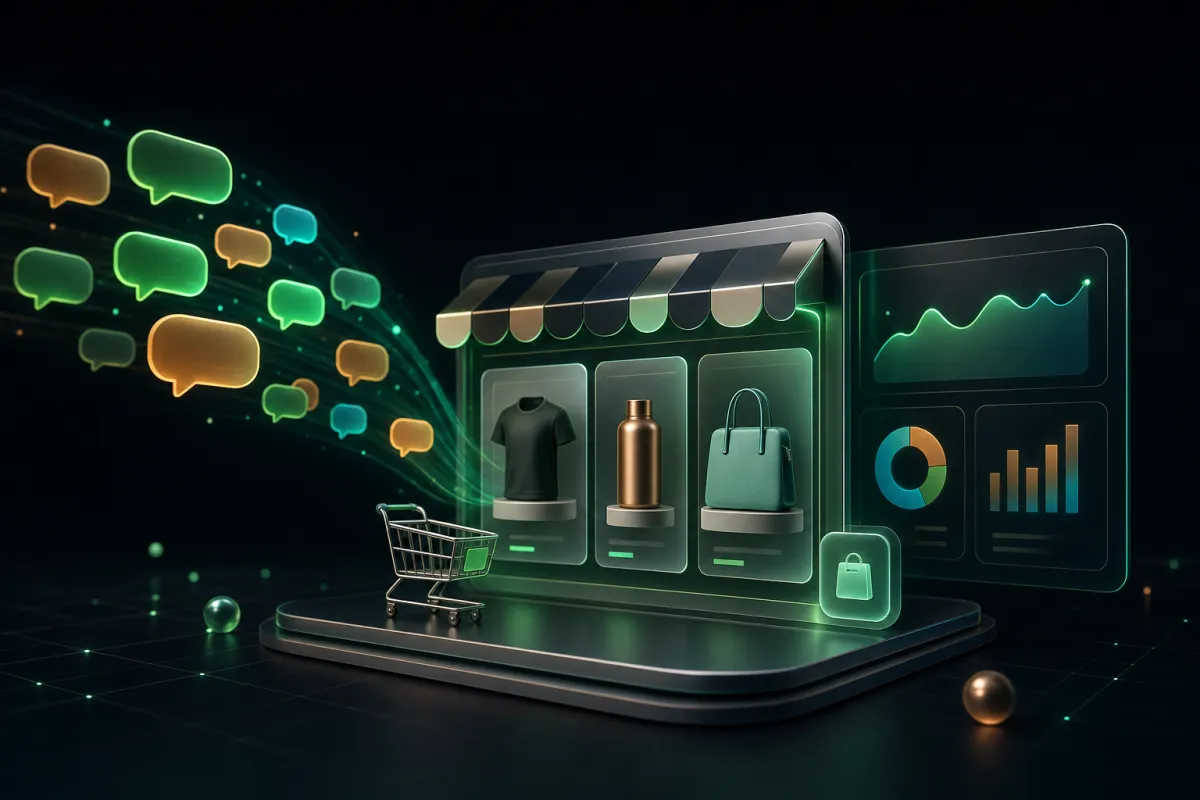
Moving from WhatsApp Business to an online store makes sense when your orders, payments, delivery details and customer chats start getting mixed up. A store gives you a proper product catalog, cart, checkout and dashboard, while WhatsApp and Instagram can still remain your best channels for discovery, support and repeat sales.
You do not need to stop DM selling overnight. The practical path is to keep using WhatsApp and Instagram for conversations, but move ordering to a store link where customers can browse, add items, pay or choose cash on delivery, and share accurate delivery details.
Key takeaways
- WhatsApp and Instagram are excellent for starting sales, but they become hard to manage when order volume grows.
- Your own online store reduces manual work by giving customers a catalog, cart, checkout and order flow.
- You can still use WhatsApp for product questions, after-sales support, repeat orders and customer trust.
- A store dashboard helps you see orders and business activity in one place instead of searching through chats.
- The best shift is gradual: start with your best-selling products, share the store link in DMs, and improve from real customer feedback.
When does WhatsApp and Instagram selling stop scaling?
WhatsApp and Instagram selling stops scaling when you spend more time managing chats than growing the business. If every order needs manual product photos, price confirmation, address collection, payment follow-up and courier updates, you are already doing the work of a store without the system.
For many Indian sellers, this stage comes quietly. At first, ten chats a day feel exciting. Later, the same process becomes confusing because customers ask the same questions, change orders, send half addresses, pay from different UPI IDs, or forget what they selected.
Common signs that DM selling is becoming difficult include:
- You keep scrolling through chats to find size, colour, quantity or address details.
- You send the same product photos and price list again and again.
- Customers ask available hai? because your catalog is not always updated.
- You miss follow-ups because Instagram DMs, WhatsApp messages and calls are all separate.
- You need to manually confirm UPI payments before packing every order.
- Your team members do not know which order is confirmed, packed, shipped or cancelled.
- Customers want to browse at night, but they need you to reply before ordering.
At this point, the problem is not WhatsApp or Instagram. The problem is that chat is being used for jobs that a store can handle better.
What changes when you move from WhatsApp Business to online store?
The biggest change is that your customer can place an order without waiting for a manual reply. Your products, prices, variants, cart, checkout and basic order details move into one structured flow.
For example, instead of sending ten kurti photos in a chat, you can send one store link. The customer can open the catalog, choose size and colour, add to cart, enter address, select payment or cash on delivery if you offer it, and place the order.
This helps you in three simple ways:
- Less repeated explaining: Product names, images, descriptions, prices and availability can be shown on product pages.
- Cleaner order details: Name, phone, address, product, quantity and payment choice are captured in a standard format.
- Better tracking: You can see what orders came in and what needs action, instead of depending only on memory or chat labels.
A good online store does not replace your personal selling style. It gives that style a proper base, so you can spend more time helping customers and less time copying addresses.
WhatsApp and Instagram vs your own online store: what is each good for?
WhatsApp and Instagram are best for conversation and discovery. Your own store is best for structured ordering, checkout and tracking.
| Channel | Best for | Where it becomes difficult |
|---|---|---|
| WhatsApp Business | Support, repeat customers, quick questions, order updates | Manual order collection, searching old chats, managing many customers at once |
| Discovery, reels, product launches, DMs from interested buyers | Turning interest into confirmed orders, tracking payments and addresses | |
| Own online store | Catalog, cart, checkout, order records, customer browsing | Needs setup, product content and regular maintenance |
The best setup for many Indian businesses is not one channel only. It is a simple mix: Instagram for reach, WhatsApp for trust and support, and your store for the actual order.
How does a catalog, cart and checkout help Indian sellers?
A catalog, cart and checkout help because they turn interest into an order without making the customer wait. This is important when your buyer is comparing products, shopping after work, or ordering during a sale.
Catalog: show products clearly
Your catalog is where customers see what you sell. For a boutique, this could mean sarees, kurtis, co-ord sets or accessories. For a home food business, it could mean snacks, pickles or festive hampers. For a manufacturer, it could mean product lines, sizes and enquiry options.
A clear catalog should answer basic questions before the customer messages you:
- What is the product?
- What sizes, colours or variants are available?
- What is included in the pack?
- How should the customer use, store or care for it?
- Is it ready to ship or made to order?
Cart: let customers build their order
A cart allows customers to add more than one item and review the total before checkout. This is much easier than asking them to send screenshots of each item on WhatsApp.
For sellers, it also reduces confusion. You do not have to guess whether the customer wanted one piece or two, or whether they changed their mind after seeing another colour.
Checkout: collect details in a proper format
Checkout is where the customer enters address, delivery details and payment preference. In India, customers may prefer UPI, cards, net banking, wallets or cash on delivery depending on your business and payment setup.
If you are planning online payments, read this practical guide on accepting UPI and card payments on your online store in India. If you offer COD, also understand how to reduce failed deliveries using a careful process; this guide on cash on delivery and RTO for Indian online stores is a useful next read.
Why is a dashboard better than only using chat labels?
A dashboard is better because it shows business activity in one place. Chat labels can help for small volumes, but they do not give you the same clear view of orders, status and daily activity.
When you sell only through messages, you may need to check many places: Instagram DMs, WhatsApp chats, UPI app, courier portal, notebook, spreadsheet and team messages. This creates mistakes, especially when more than one person is handling orders.
A store dashboard can help you watch what needs attention. Depending on the platform you use, you may be able to see new orders, customer details, payment status, fulfilment status and product activity. The point is simple: your orders should not live only inside conversations.
Submerce India, made by Bytecode and launching soon, is an online store builder with a realtime dashboard for Indian businesses. If you are moving from WhatsApp and Instagram orders to a more organised selling flow, it is built around that need.
Should you stop using WhatsApp after launching your store?
No, you should not stop using WhatsApp if your customers already trust you there. Keep WhatsApp for support, product advice, order updates and repeat selling, but try to move order placement to your store link.
For many Indian buyers, WhatsApp feels personal. They may want to ask whether a size will fit, whether a product is suitable for gifting, or whether delivery can happen before a festival. These conversations are valuable.
The mistake is using WhatsApp for every operational step. A cleaner setup looks like this:
- Customer discovers your product on Instagram, referral, Google or WhatsApp status.
- You share a store link instead of manually sending all product details.
- Customer browses the catalog and places the order on the store.
- You use WhatsApp for confirmation, support or special questions where needed.
- For repeat buyers, you share new arrivals or offers and again guide them to the store link.
This keeps the human connection while reducing manual work.
How to move from DM selling to your own online store step by step
The safest way is to move in phases, not in one big jump. Start with the products that already sell well and build a simple order flow around them.
- List your best-selling products first: Do not upload your entire stock on day one if that slows you down. Start with items customers already ask for often.
- Prepare clean product content: Use clear names, photos, prices, sizes, colours, material details, delivery notes and return notes where relevant.
- Decide your payment options: Choose how you will accept UPI, cards, prepaid orders and COD if it suits your business.
- Plan delivery before launch: Decide whether you will use courier partners directly, a shipping aggregator, local delivery or pickup.
- Add basic store policies: Mention shipping, return, exchange, cancellation and support process in simple language.
- Test like a customer: Place a test order, check the confirmation flow, review the address format and see if anything is confusing.
- Start sharing the link: Add it to your Instagram bio, WhatsApp Business profile, WhatsApp status, Google Business Profile and printed material if you use it.
- Train your team: Everyone who replies to customers should know when to answer in chat and when to send the store link.
As of 2026, Indian sellers should also think about GST, invoices, consumer protection rules, privacy and platform terms in a general compliance sense when selling online. This is not legal or tax advice — check with a CA or lawyer for your exact business.
What should your first online store include?
Your first store should include only what helps customers understand, trust and buy from you. Avoid making it complicated at the start.
A practical first version can include:
- Home page: A clear explanation of what you sell and who it is for.
- Product pages: Photos, price, variants, description, delivery note and care or usage details.
- Cart and checkout: A simple path from selection to order placement.
- Contact and support: Clear support timings and channels, including WhatsApp if you use it.
- Policy pages: Shipping, return, exchange, cancellation and privacy information in simple Indian English.
- Basic tracking process: A way for your team to know what is new, packed, shipped or completed.
If you already run a website but it is slow or confusing, do not ignore that. A slow store can make customers drop off before checkout, especially on mobile data. Bytecode offers a free website, store and funnel speed plus SEO audit if you want a technical review before improving your store.
How to tell customers about your new store without losing personal touch
Tell customers that your store makes ordering easier, while support remains available on WhatsApp. Do not make it sound like you are pushing them away.
You can use simple messages like:
Hi, we have made ordering easier. You can now see products, sizes and place orders here: [store link]. If you need help choosing, just message us on WhatsApp.
For faster order confirmation, please place your order through our website. We are still available here for questions and support.
Also update your Instagram bio, pinned posts, highlights, WhatsApp Business catalog note and status. If many customers still message you with screenshots, reply kindly and guide them to the exact product page.
In the beginning, some customers will continue ordering through chat. That is normal. The goal is not to force everyone immediately. The goal is to slowly teach customers that the store is the easiest place to order.
Frequently asked questions
Is WhatsApp Business enough for selling online in India?
WhatsApp Business can be enough when you have a small number of orders and customers need personal help. But when orders grow, it becomes hard to manage product details, payments, addresses and follow-ups only through chat. A store gives you a more organised system while WhatsApp remains useful for support.
Do I need an online store if I already sell on Instagram?
Yes, if Instagram DMs are becoming difficult to manage or customers keep asking for product links, prices and availability. Instagram is strong for discovery, but a store is better for browsing, cart, checkout and order records. You can keep using Instagram to bring people to your store.
Can I keep cash on delivery on my own store?
You can offer cash on delivery if it suits your products, margins and delivery process. Many Indian buyers are comfortable with COD, but it also needs careful confirmation and shipping discipline. Decide your COD rules before promoting it widely.
What products should I upload first?
Start with products that already sell well through WhatsApp or Instagram. These products have proven interest, so they are the easiest way to test your store. Add more categories after your order process is smooth.
Will customers still message me after I launch a store?
Yes, many customers will still message you, especially for sizing, gifting, delivery timing or trust-related questions. That is fine. The store should handle structured ordering, while WhatsApp handles helpful conversation.
Visit Submerce India to get started with your own online store
If your WhatsApp and Instagram orders are becoming hard to manage, this is a good time to plan your own store. Start small, move your best-selling products first, and keep WhatsApp for the conversations that actually need a human reply.
Submerce India is an online store builder with a realtime dashboard for Indian businesses, launching soon. It is made by Bytecode, a development studio with offices in Kolkata and New York, and the team behind Submerce India. Visit Submerce India to get started with your own online store.